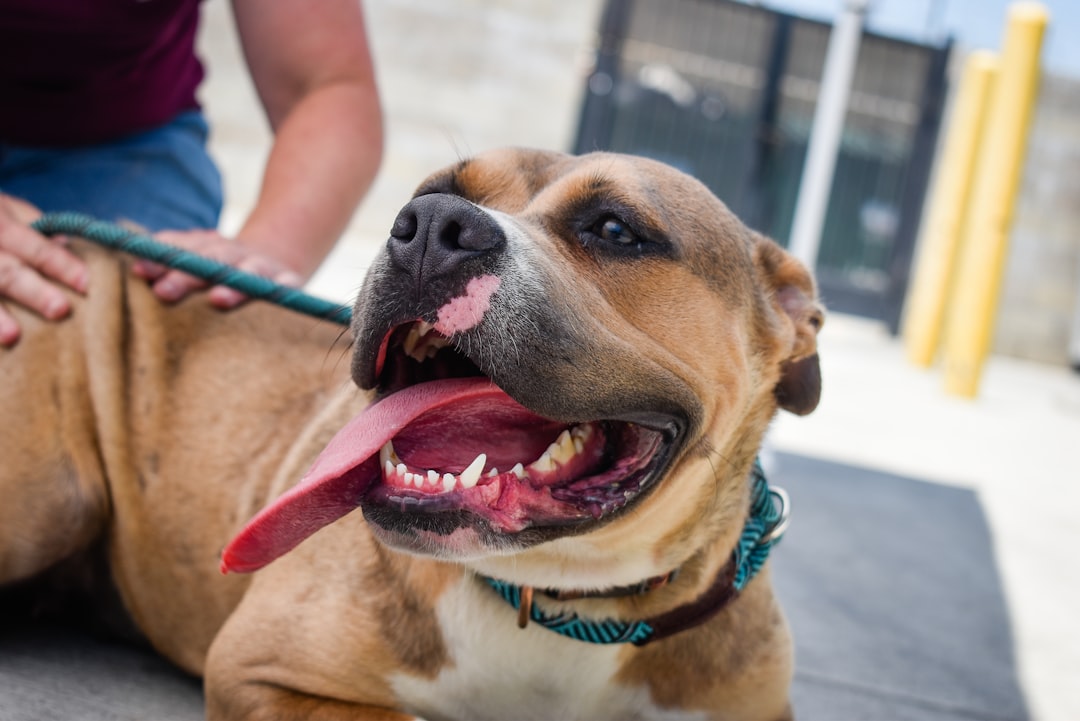
After fifteen years of working hands-on with post-operative orthopedic patients, I can say without hesitation that the underwater treadmill is the single most powerful tool I use following cranial cruciate ligament repair. Whether the surgeon performed a tibial plateau leveling osteotomy (TPLO) or a tibial tuberosity advancement (TTA), the mechanical challenges facing that limb in the first twelve weeks are significant. Bone is healing. Soft tissue is remodeling. The quadriceps and hamstring groups have already lost meaningful mass from the pre-surgical disuse period. Aquatic rehabilitation lets me address all of those problems at the same time without loading the repair site beyond what the tissue can tolerate. This post is a detailed walkthrough of exactly how I structure aquatic therapy after CCL repair, from the first session in the pool through the return-to-sport phase.
Why Water Changes Everything After CCL Repair
The physics here are not complicated, but they are worth stating plainly because they drive every decision I make about water depth and session timing.
Buoyancy reduces the compressive load transmitted through the stifle. Resistance from water movement challenges the neuromuscular system in all planes simultaneously. Hydrostatic pressure reduces periarticular edema by providing circumferential compression across the entire limb. Warm water at 88 to 92 degrees Fahrenheit increases tissue extensibility and reduces muscle guarding, which lets me see a more accurate picture of the patient's gait mechanics than I ever could on dry land in the early post-operative period.
The surgical repair itself is important context. In a TPLO, the surgeon cuts and rotates the tibial plateau to neutralize cranial tibial thrust during weight-bearing. In a TTA, the tibial tuberosity is advanced to realign the patellar tendon. Both procedures create a period of bone healing that dictates how aggressively I can load the limb. My protocols are always built around the surgeon's specific timeline, and I work in close communication with the supervising veterinarian before and throughout every case.
Buoyancy Calculations and Water Depth Selection
This is the section I spend the most time explaining to clients and referring veterinarians alike, because water depth is not a casual decision. It is a precise loading prescription.
The functional relationship between water depth and weight-bearing percentage has been studied in canine biomechanics research, and while individual body composition affects the numbers, the general landmarks I use are as follows. When water is at the level of the greater trochanter, the dog is bearing roughly 38 percent of its body weight through its limbs. At the level of the greater trochanter-to-hip joint interface, that load sits closer to 45 percent. Drop water depth to the level of the stifle joint itself and you are approaching 85 to 91 percent of body weight. Raise the water to the dorsal spinous processes of the lumbar vertebrae and you bring the load back down to approximately 25 percent.
I use these landmarks deliberately. In Phase One, I want that trochanteric or iliac crest depth. The surgical limb is protected. The dog can begin the neuromotor work of stepping without threatening the healing osteotomy site. As the weeks advance and the supervising DVM confirms appropriate radiographic healing, I systematically lower the water level to increase the load incrementally.
Body condition score matters here too. An overweight patient has more adipose tissue contributing to their buoyancy, which means the same water depth delivers proportionally less load than it would in a lean athlete. I account for that in my depth adjustments.
Phase One: Non-Weight-Bearing Hydrotherapy
I typically begin aquatic therapy between days ten and fourteen post-operatively for TPLO patients and between days seven and ten for TTA patients, pending incision assessment by the veterinarian. The wound must be fully closed and dry. I am not entering the pool with open tissue.
Phase One runs from initial clearance through approximately week four or five, depending on the individual patient's clinical presentation.
My goals in this phase are specific and limited. I want to restore normal stepping kinematics in the operated limb, reduce disuse atrophy in the quadriceps and gluteal muscles, and begin re-educating proprioceptive pathways that were disrupted by the pre-surgical stifle instability and the surgery itself. The cranial cruciate ligament is richly innervated with mechanoreceptors. When it ruptures, that sensory input is lost. The joint capsule and surrounding soft tissue pick up some of that slack, but the deficit is real and it shows up as delayed postural responses and altered limb placement during gait.
Water depth in Phase One is set at the level of the greater trochanter or slightly above for most patients. For small breeds or very lean dogs, I may adjust slightly shallower to achieve a similar loading percentage.
Treadmill speed in Phase One is slow. I am talking 0.3 to 0.5 miles per hour. I am not conditioning cardiovascular fitness here. I am re-patterning gait. I watch step length symmetry, swing phase duration, stifle flexion angle during swing, and paw placement accuracy. Any toe dragging or circumduction tells me the neuromuscular signal is still noisy and I slow down further.
Session structure in Phase One: a five-minute pre-session dry-land warm-up with passive range of motion and gentle joint mobilization, followed by two intervals of three to four minutes of treadmill walking separated by a two-minute rest, followed by a post-session cool-down with cryotherapy to the stifle. Total pool time is eight to ten minutes. Total appointment time is approximately thirty-five minutes.
Phase Two: Partial Weight-Bearing Progression
Phase Two begins when I see consistent, voluntary limb use on the underwater treadmill and when the supervising veterinarian has confirmed radiographic evidence of early callus formation at the osteotomy site. For most TPLO patients this is somewhere between weeks four and six post-operatively. For TTA patients, the bone-plate fixation timeline is slightly different and I defer entirely to the surgeon's guidance.
The defining feature of Phase Two is systematic water depth reduction. I drop the water level incrementally across sessions, moving from trochanteric depth toward the mid-femoral region. This shifts weight-bearing from approximately 38 percent toward 55 to 65 percent of body weight. The patient has to work harder. The muscles are being asked to provide genuine joint stabilization during the stance phase.
Treadmill speed increases modestly, typically to 0.6 to 0.9 miles per hour, but speed is not my primary variable. I am more focused on the quality of movement than the quantity. I watch for compensatory lumbar hyperextension, which tells me the gluteal and hamstring groups are fatiguing and the dog is trying to unload the hindlimb through postural adjustment. When I see that, I end the interval.
In Phase Two I may also begin introducing gentle incline work on the treadmill. A two to three degree incline increases stifle flexion during the stance phase and recruits the quadriceps more aggressively. I use this judiciously. Too much incline too early shifts load anteriorly in a way that can stress the healing tibial plateau.
Session structure in Phase Two expands. I move to three intervals of four to five minutes each, with ninety-second rest periods between intervals. Total pool time is fourteen to sixteen minutes. Dry-land work before and after the pool session includes therapeutic exercises on land: controlled sit-to-stand repetitions, balance disc work, and cookie stretches to encourage lateral trunk flexion.
Phase Three: Full Load and Functional Strength
Phase Three is where the work gets genuinely athletic. I do not enter this phase before week eight at the absolute earliest for TPLO patients and typically closer to weeks ten to twelve. The supervising veterinarian's radiographic assessment of the osteotomy site is non-negotiable here. I will not progress a patient into full loading protocols without that confirmation.
Water depth in Phase Three drops to the level of the stifle joint or slightly above. The dog is now bearing 80 to 90 percent of its body weight through the limb. The underwater environment still provides resistance training that is genuinely difficult to replicate on dry land at this stage, because water provides multidirectional challenge to the entire kinetic chain rather than just the sagittal plane.
Treadmill speeds in Phase Three range from 1.0 to 1.8 miles per hour depending on the dog's size, breed, and athletic history. For working dogs or canine athletes I may push toward the upper end of that range. For geriatric patients or dogs with concurrent orthopedic conditions I stay conservative.
I also introduce incline variation more aggressively in Phase Three. Alternating between flat, two-degree and four-degree inclines within a single session challenges the neuromuscular system to adapt to changing load demands, which is a closer simulation of real-world terrain than flat treadmill work alone.
Session structure in Phase Three: four intervals of five to six minutes each, with sixty-second rest periods. Total pool time is twenty-two to twenty-six minutes. Dry-land therapeutic exercise is more demanding now and includes cavaletti pole work, proprioceptive disc sequences, and controlled hill climbing if the facility permits outdoor space.
Return-to-sport clearance is not mine to give. That decision belongs to the veterinarian supervising the case. My job is to present objective data: symmetric limb use on the treadmill, absent or minimal compensatory patterns, consistent stance phase loading, full or near-full range of motion in the stifle. Force platform gait analysis, where available, provides the most objective picture of symmetry and I request it when the referring practice has access.
Session Duration as a Function of Recovery Stage
I want to address this directly because I see inconsistency in how rehabilitation practitioners think about session duration, and that inconsistency can harm patients.
Longer is not better. Fatigued muscle does not strengthen. Fatigued muscle uses compensatory movement strategies that engrain poor mechanics. I would rather have a patient complete three high-quality intervals of four minutes each than slog through seven minutes of deteriorating gait because the therapist did not watch closely enough.
My general framework by post-operative week is as follows. Weeks one through four: eight to ten minutes of total pool time. Weeks four through eight: fourteen to eighteen minutes of total pool time. Weeks eight through twelve: twenty to twenty-six minutes of total pool time. Beyond week twelve for dogs transitioning to athletic performance goals: up to thirty minutes of structured intervals with specific speed and incline programming.
I adjust within those ranges based on what I observe. A dog that is panting heavily, losing step symmetry, or showing signs of thermal stress gets pulled from the pool early. Water temperature, ambient temperature and the dog's pre-existing cardiovascular fitness all factor in. Brachycephalic breeds need particular attention to heat load even in a therapeutic pool.
Red Flags I Watch for During Every Session
Fifteen years of hands-on rehabilitation work have taught me that the session is not just exercise delivery. It is continuous clinical observation. I am watching for signals that tell me the protocol is outpacing the patient's recovery.
Acute stifle effusion appearing or worsening after a session is a clear sign of excessive loading. I back off depth and duration immediately and communicate with the supervising veterinarian. New onset lameness on dry land following a pool session requires the same response. Excessive panting or signs of thermal distress require session termination regardless of where we are in the protocol.
I also watch for behavioral changes that indicate pain. A dog that was engaged and forward in the pool who suddenly becomes reluctant to step onto the treadmill is telling me something. Glasgow Composite Pain Scale assessments before and after each session give me a structured way to track that information and report it accurately to the veterinary team.
Finally, I want to name something that does not get discussed enough in rehabilitation circles. The quality of the human-animal bond during a session matters. A dog that trusts the process, that has been introduced to the pool gradually with positive reinforcement and has learned that this environment is safe, will work harder and give me better kinematic data than an anxious dog fighting the water. I invest time in the early sessions making the pool a good place to be. That time is not wasted. It is part of the protocol.
If you are a rehabilitation practitioner or a referring DVM with questions about how I structure aquatic protocols for specific cases, I encourage you to reach out. The American College of Veterinary Sports Medicine and Rehabilitation and the Canine Rehabilitation Institute both publish continuing education resources that I find valuable for staying current on evidence-based protocol development. The Veterinary Society of Surgical Oncology also maintains orthopedic resources worth reviewing for complex comorbidity cases.