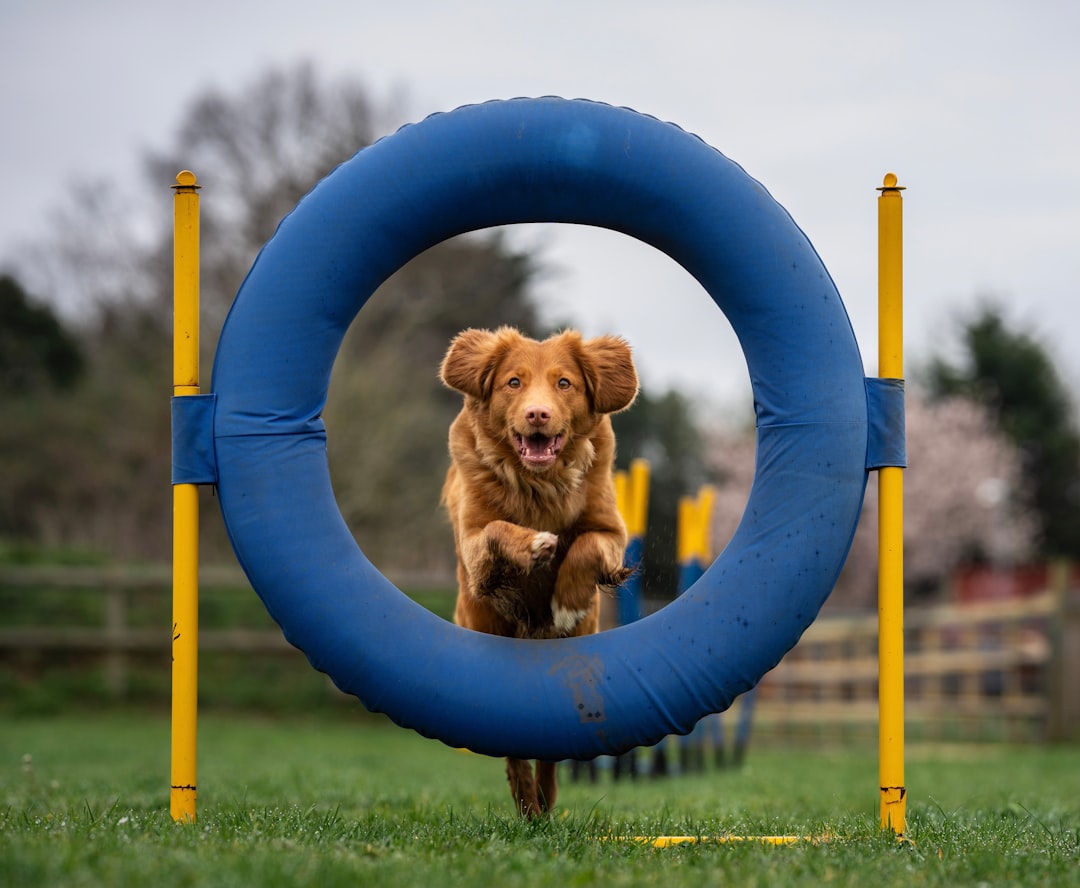
The Weekend Warrior Problem in Canine Sport
If you work in canine rehabilitation long enough, you start seeing a very predictable pattern. A Border Collie comes in with a partial supraspinatus tear. A Labrador presents with acute iliopsoas strain. A Whippet shows up after a lure coursing trial with a hamstring origin avulsion. And when you start asking about training history, the answer is almost always the same: they train on weekends, compete on weekends, and spend most of the week as a house dog.
That is the weekend warrior dog. And after 15-plus years of hands-on rehabilitation work, I can tell you those animals are among the most injury-prone I see. Not because the sports themselves are inherently dangerous, but because the mismatch between tissue conditioning and competitive demand is enormous.
In human sports medicine, the weekend warrior phenomenon is well documented. A person who sits at a desk Monday through Friday and then plays three hours of recreational basketball Saturday is exposing undertrained musculotendinous structures to high-velocity eccentric loads they simply are not prepared to absorb. The same biomechanical logic applies completely to dogs.
The solution is a structured canine pre-season conditioning program that builds the tissue capacity, neuromuscular coordination and cardiovascular base required to compete safely. In this post I want to walk through exactly how I approach that programming for three of the most popular weekend warrior sports: dock diving, flyball and lure coursing.
What Tissues Are Actually at Risk
Before I design any pre-season program, I want to understand what tissues take the greatest load in a given sport. That dictates where I focus preparation work.
Across all three sports I work with most frequently, certain structures come up again and again as the primary injury sites in deconditioned dogs.
Shoulder and bicipital apparatus. The infraspinatus, supraspinatus and biceps brachii tendon are under significant eccentric load during landing and deceleration. Dock diving dogs absorb enormous impact forces through the forelimbs on water entry. Flyball dogs decelerate hard over the box. Supraspinatus tendinopathy is probably the most common chronic overuse injury I see in all three sports.
Iliopsoas. This is the soft tissue injury that gets missed most often by handlers who are not tuned in to subtle gait asymmetry. The iliopsoas is a primary hip flexor and lumbar stabilizer. In dogs that sprint from cold and change direction aggressively, partial iliopsoas tears are common. Lure coursing dogs are particularly vulnerable given the tight turning patterns required.
Cranial cruciate ligament (CCL). While acute traumatic CCL rupture is less common in conditioned dogs, partial tears in high-impact landing and cutting sports are a real risk. The popliteal and caudal thigh musculature is the primary dynamic stabilizer of the stifle, and if that muscle group is underprepared, the CCL absorbs forces it should not.
Carpal flexor tendons and accessory carpal bone. Flyball dogs in particular put enormous torque through the carpus on box turn. Carpal hyperextension injuries are a known flyball-specific risk.
Knowing these structures exist on the risk map is what shapes my conditioning priorities.
Cardiovascular vs Neuromuscular Conditioning: Getting the Ratio Right
This is the question I get most often from handlers who are doing some conditioning work but not sure if they are doing the right kind. They want to know: how much cardio versus how much strength and coordination work?
My answer is that the ratio is not fixed. It shifts across the pre-season block based on where the dog is in their preparation timeline.
In the first four weeks of pre-season work, I run approximately a 60:40 split favoring cardiovascular and aerobic base-building. The reasoning is simple. A dog that is not aerobically fit will fatigue faster, and a fatigued dog loses neuromuscular control. Fatigue is a major precursor to injury because motor patterns break down and tissue protection reflexes slow. You cannot build meaningful neuromuscular quality on a fatigued aerobic foundation.
Aerobic base work for me means controlled leash walks with duration progression, swimming or underwater treadmill work at low resistance, and structured interval walking patterns. I am not looking for high-intensity cardio at this stage. I am looking to build mitochondrial density, improve lactate threshold and condition the cardiovascular system to support sustained activity.
By weeks five through eight, that ratio inverts closer to 40:60 in favor of neuromuscular and sport-specific conditioning. At this point I am targeting proprioceptive challenge, eccentric loading, reactive stabilization and movement pattern refinement. Balance disc work, cavaletti rails, incline and decline exercises, controlled leaping onto stable platforms, and directional change drills all enter the program here.
The neuromuscular component is where injury prevention lives. Research from the American College of Veterinary Sports Medicine and Rehabilitation consistently emphasizes that proprioceptive deficits and neuromuscular fatigue are primary contributors to acute soft tissue injury in canine athletes. Building that coordination system before competitive loads arrive is non-negotiable in my programming.
Sport-Specific Programming: Dock Diving, Flyball, and Lure Coursing
Once I have laid a general conditioning foundation, I customize based on sport-specific movement demands. Each sport has a distinct biomechanical signature.
Dock Diving
Dock diving is a power-endurance sport with a ballistic loading pattern. The dog sprints a short distance, launches from a platform and then enters water in a high-velocity dive. The primary tissue stressors are the explosive concentric force production at launch and the eccentric absorption on forelimb entry into water.
My pre-season priorities for dock divers are forelimb eccentric strength and shoulder stability. I use controlled landing-from-height exercises starting with very low platforms (four to six inches) and progressing gradually. I emphasize scapular stabilizer strengthening through weight-shifting exercises and controlled reach patterns. Underwater treadmill work is excellent here because water resistance builds the shoulder girdle musculature while reducing impact loading during the conditioning phase.
I also pay close attention to core musculature in dock divers. A dog that lacks thoracolumbar stability cannot produce efficient power transfer from hindlimb push-off through the spine to the forelimbs during the flight phase. Cavaletti rails, balance disc work and controlled swimming all address this.
Flyball
Flyball is a sprint-deceleration-turn-sprint pattern with highly repetitive mechanical loading on the forelimbs at the box. The box turn is the highest-risk moment in flyball biomechanics. Dogs are absorbing deceleration forces, changing direction 180 degrees and immediately re-accelerating, all on the same forelimb every single repetition.
My flyball pre-season focus is carpal and shoulder stability combined with hindlimb drive work. I want to see strong flexor tendon preparation through gradual progressive loading. I also spend significant time on proprioception through the distal forelimb, using balance disc and unstable surface work to train the sensory pathways that protect the carpus and elbow during high-load turning.
Sprint mechanics also matter in flyball. I work with handlers on controlled restrained-recall sprint patterns that train acceleration mechanics without the full competitive volume of repetitions.
Lure Coursing
Lure coursing is a high-velocity, direction-changing, sustained sprint sport. The injury risks here concentrate around the iliopsoas, proximal hindlimb musculature and CCL. Dogs are running at near-maximum velocity and executing tight turns driven by lure pattern changes they cannot anticipate.
Pre-season conditioning for lure coursing dogs prioritizes iliopsoas flexibility and strengthening, caudal thigh group eccentric loading and hindlimb proprioception. I assess iliopsoas palpation response and hip extension range of motion before designing the program because subclinical iliopsoas tightness is extremely common in dogs returning from an off-season.
Incline treadmill work, cavaletti at varying heights, and controlled direction-change patterns all feature prominently. I also emphasize warm-up protocol education with handlers because lure coursing dogs are often walked to a start line and then asked for maximal sprint effort with minimal warm-up. That tissue temperature and viscosity mismatch is a direct injury risk.
Structuring the Pre-Season Block
When a handler comes to me wanting to prep their dog for an upcoming competitive season, I work within an eight to twelve week pre-season window if possible. Twelve weeks is ideal. Eight weeks is workable. Anything shorter than six weeks is a risk management conversation about expectations.
Here is how I structure a representative eight-week block.
Weeks 1-2: Assessment and base-building. I conduct a full movement screen that includes gait evaluation, joint range of motion assessment, muscle mass symmetry comparison and palpation of primary injury-risk structures. I am looking for subclinical asymmetry, compensatory movement patterns and tissue tenderness before we add load. Programming at this stage is low-intensity aerobic work only.
Weeks 3-4: Aerobic progression and proprioceptive introduction. Duration and slight intensity increase on aerobic work. Introduction of balance and proprioceptive exercises at low challenge level. Cavaletti rails, basic balance disc standing, controlled incline walking. Volume stays conservative.
Weeks 5-6: Neuromuscular loading phase. The ratio shift happens here. Sport-specific movement patterns enter the program. Eccentric loading exercises introduced progressively. Controlled sprint mechanics work begins. Aerobic maintenance continues but is no longer the primary training stimulus.
Weeks 7-8: Sport-specific integration and volume taper. Full sport-specific movement drills at moderate intensity. Volume begins to taper in the final week to allow tissue recovery before competitive season begins. I want the dog to arrive at their first competition feeling powerful and recovered, not fatigued from training.
Throughout all eight weeks, I emphasize handler education on daily observation, recognizing early signs of soreness or compensatory movement and maintaining appropriate rest days. Dogs that train or compete only on weekends still need the weekday low-level activity that maintains tissue health. Complete sedentary rest during the week followed by weekend athletic demand is precisely the problem we are trying to solve.
Red Flags and When to Pull Back
One of the most important parts of any pre-season program is knowing when to stop and reassess rather than push through. As a CCRA working under veterinary supervision, I am always watchful for signs that require the case to go back to the veterinarian for evaluation before training continues.
Unilateral forelimb or hindlimb offloading during or after training sessions is a stop sign. Subtle lameness that appears only after exercise and resolves with rest is a classic presentation of early tendinopathy or a developing soft tissue injury. Pushing through that pattern accelerates the damage.
Behavioral changes during exercise also matter. A dog that was enthusiastic about training and suddenly becomes reluctant, slows pace unprompted or refuses directional change exercises is communicating discomfort through behavior. I take that seriously.
Palpation tenderness at the bicipital groove, supraspinatus insertion, iliopsoas belly or stifle joint line on any routine check warrants a pause and veterinary consultation. The goal of pre-season conditioning is to arrive at competition healthy. Identifying a developing problem in week four is far better than managing a full injury after week one of competition.
The Bottom Line on Weekend Warrior Conditioning
The weekend warrior problem exists in canine sport for the same reason it exists in human recreational athletics. Life is busy, training time is limited and the competition calendar does not always align with ideal preparation timelines. But the tissue biology does not care about the competition schedule. Muscles, tendons and ligaments adapt on their own timeline, and loading them beyond their current adaptive capacity produces injury.
A structured canine pre-season conditioning program built on a sound cardiovascular base, progressive neuromuscular loading and sport-specific movement preparation genuinely changes those odds. I have watched dogs that historically came off every competitive season with soft tissue injuries go through full seasons without incident after a proper pre-season block. That outcome does not happen by accident.
If you are preparing a dock diving, flyball or lure coursing dog for the 2026 competitive season and you are not sure where to start, talk to a certified canine rehabilitation practitioner or a veterinarian with a sports medicine background. A movement screen before training begins is always worth the investment. Catching subclinical dysfunction before it becomes a clinical injury is exactly what this field is for.