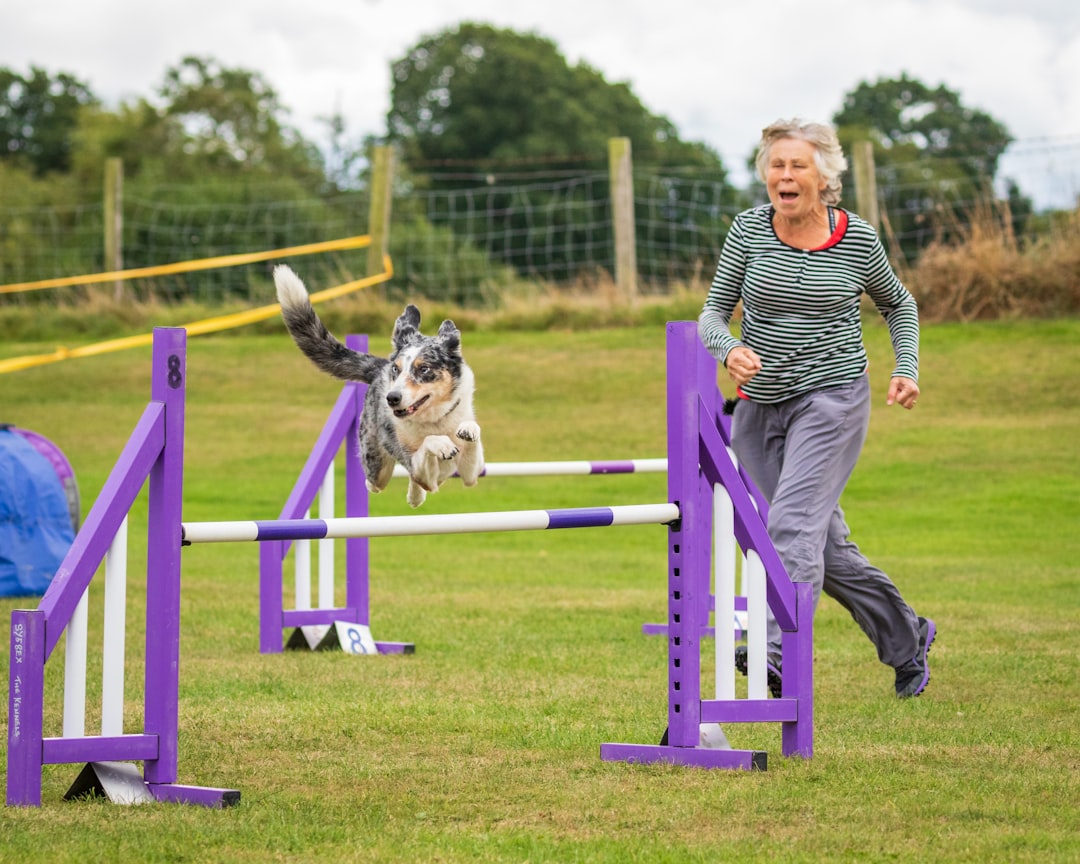
In my 15 years of working in canine rehabilitation, shoulder pathology in working dogs is one of the most underdiagnosed and under-rehabilitated conditions I encounter. Dogs that are pulling, jumping, tracking, carrying loads or executing repeated contact obstacles accumulate enormous cumulative stress through the glenohumeral joint and its surrounding soft tissue structures. When the shoulder finally speaks up, it tends to do so quietly at first: a subtle forelimb lameness that clears with a short warm-up, a reluctance to descend stairs, a slight head bob that an experienced handler notices but cannot easily articulate to a clinician.
Biceps tenosynovitis and supraspinatus tendinopathy are the two conditions I see most frequently in this population, and they are often concurrent. Getting the anatomy right, executing a thorough clinical examination, selecting appropriate imaging and building a rational rehabilitation progression are all essential to returning these dogs to their operational roles with durability rather than just temporary soundness.
Canine Shoulder Anatomy: What Makes This Joint Vulnerable
The canine glenohumeral joint is a ball-and-socket articulation between the glenoid cavity of the scapula and the humeral head. Unlike the human shoulder, the canine version is relatively shallow and relies heavily on its musculotendinous cuff for dynamic stability. The rotator cuff equivalent in dogs includes the supraspinatus, infraspinatus, subscapularis and teres minor, all of which converge on the proximal humerus and function as both primary movers and joint compressors.
The biceps brachii originates at the supraglenoid tubercle and travels through the bicipital groove of the proximal humerus, enclosed in a tendon sheath that communicates directly with the glenohumeral joint capsule. This anatomical relationship is critical because synovial fluid from the joint space bathes the proximal biceps tendon. Any intra-articular inflammatory process can secondarily inflame the tendon sheath, and primary biceps tendinopathy can provoke reactive joint effusion.
The medial glenohumeral ligament provides primary medial stability and is a structure I pay close attention to in dogs with suspected medial compartment pathology. The joint capsule itself is reinforced by the subscapularis medially and the infraspinatus laterally. In working dogs generating repetitive forelimb extension loads, the infraspinatus insertion and the supraspinatus footprint at the greater tubercle are high-stress zones prone to enthesopathy over time.
Biceps Tenosynovitis: Pathophysiology and Why Working Dogs Are at Risk
Biceps tenosynovitis in dogs represents inflammation of the biceps brachii tendon and its surrounding synovial sheath. The condition exists on a spectrum from mild synovial irritation with intact tendon fibers to severe tendon fiber disruption with intratendinous mineralization, partial tears or complete rupture in extreme cases.
The pathophysiological cascade typically begins with repetitive eccentric loading during deceleration and landing activities. In working dogs, this means tactical dogs executing repeated building entries, search and rescue dogs navigating rubble piles and detection dogs performing repeated sit-to-stand transitions on hard surfaces. The biceps tendon functions as a brake on shoulder extension, absorbing high eccentric forces particularly when a dog lands from elevation or abruptly changes direction at speed. Over time, repetitive microtrauma overwhelms the tendon's intrinsic repair capacity, leading to disorganized collagen architecture, neovascularization within the tendon body and the chronic low-grade inflammatory state that defines tendinopathy.
Osteochondrosis dissecans of the humeral head is an important differential and concurrent finding in younger working dogs, and the joint effusion associated with OCD lesions can accelerate biceps tendon sheath inflammation. In dogs over five years of age, degenerative joint changes at the glenohumeral joint compound the problem by altering joint mechanics and increasing frictional stress on the bicipital groove.
Supraspinatus Tendinopathy: The Often-Missed Companion Diagnosis
Supraspinatus tendinopathy deserves its own section because I see it missed as a primary or concurrent diagnosis far too often. The supraspinatus originates from the supraspinous fossa of the scapula and inserts at the greater tubercle of the humerus, immediately medial to the infraspinatus footprint. Its primary function is shoulder extension and forelimb advancement, making it a workhorse muscle for any dog that covers ground at speed or generates propulsive force through the forelimb.
Chronic compressive load on the supraspinatus insertion, particularly in dogs with a high-impact work profile, leads to enthesopathy with fibrocartilaginous metaplasia and, in advanced cases, mineralization within the tendon that is visible radiographically or on ultrasound. This mineralization is not simply calcium deposition. It reflects a fundamental change in tendon tissue architecture toward a fibrocartilaginous phenotype that compromises tensile strength and increases the risk of partial tearing under load.
The clinical overlap with biceps tenosynovitis is significant. Both conditions produce forelimb lameness that is worse after rest following exercise, both may show shortened forelimb stride and both can generate a positive response on the biceps stretch test if the supraspinatus insertion is also painful during shoulder extension. Careful palpation and targeted imaging are essential to differentiate and quantify each lesion independently.
Clinical Examination Findings for Canine Shoulder Pain
My clinical shoulder examination follows a consistent sequence: observation at rest and in motion, postural assessment, muscle mass comparison, palpation and orthopedic provocation testing. Each step builds on the last.
At rest I look for forelimb abduction, external rotation of the elbow or an elevated elbow position that offloads the medial shoulder compartment. At the walk and trot, I look for a shortened cranial stride phase, reduced shoulder flexion during the swing phase and any compensatory head movement. Working dogs are particularly good at masking pain under adrenaline, so I always examine these dogs after a controlled warm-up rather than cold.
Palpation of the bicipital groove is performed with the shoulder in neutral and the elbow slightly flexed. I apply digital pressure directly over the groove just distal to the greater tubercle and assess for pain response, muscle guarding and any palpable irregularity of the tendon. For the supraspinatus I palpate the muscle belly in the supraspinous fossa and then follow the tendon to its insertion at the greater tubercle.
The biceps stretch test remains the most sensitive provocation test I use in clinical practice. With the patient standing or in lateral recumbency, I extend the shoulder fully while maintaining the elbow in flexion. This places the biceps tendon under maximum tension and reproduces pain when tenosynovitis is present. A positive test is a clear pain response, not simply reluctance to allow positioning. I also perform the shoulder abduction test and the infraspinatus contracture assessment when lateral instability or post-injury fibrosis is a concern.
Glasgow Composite Pain Scale scoring gives me an objective baseline and helps me track treatment response across sessions. I document it at every evaluation appointment without exception.
Diagnostic Imaging Considerations for Shoulder Pathology
Radiographs are my starting point, not my endpoint. Standard mediolateral and caudocranial projections allow me to assess joint space width, identify osteophyte formation, evaluate the supraglenoid tubercle for avulsion changes and detect mineralization within the supraspinatus insertion or bicipital groove. The mediolateral view with the shoulder in full extension is particularly useful for visualizing calcific deposits adjacent to the greater tubercle.
Diagnostic ultrasound is where I get the most clinically actionable information for tendon pathology. Real-time ultrasound allows dynamic assessment of tendon fiber continuity, identification of hypoechoic foci representing fiber disruption or mucinoid degeneration and quantification of synovial effusion within the bicipital tendon sheath. I look specifically at fiber alignment, the presence of neovascularization on Doppler mode and the cross-sectional area of the biceps tendon compared to the contralateral limb. The supervising DVM and I review images together to correlate sonographic findings with clinical presentation before finalizing the rehabilitation plan.
MRI provides the most complete soft tissue characterization when the clinical picture is complex or when conservative management has not produced the expected response. It excels at identifying partial tendon tears, joint capsule thickening, bone marrow edema at the enthesis and concurrent pathology within the glenohumeral joint such as labral fraying or cartilage damage. For working dogs being evaluated for return to operationally demanding roles, MRI often provides the clearest prognosis data.
Rehabilitation Progression: From Acute Management to Return to Work
Rehabilitation for shoulder tendinopathy in working dogs is not a single protocol applied uniformly. It is a progression calibrated to lesion severity, the dog's fitness baseline and the specific physical demands of its working role. I organize the progression into three phases: acute management, active rehabilitation and return-to-work conditioning.
Phase One: Acute Management (Weeks One Through Three)
The goal in the acute phase is pain control and inflammation management without producing the muscle atrophy and joint stiffness that come with complete immobilization. Activity restriction means leash walks only, on flat surfaces, for elimination purposes. No stairs, no jumping, no play.
Manual therapy in this phase focuses on gentle range-of-motion exercises through pain-free arcs, soft tissue mobilization of the shoulder girdle musculature and myofascial work targeting the infraspinatus, subscapularis and pectoral muscles that are typically guarding in compensation. I use therapeutic laser at parameters appropriate for tendon tissue to support cellular repair processes, and cold therapy applied post-session reduces reactive synovitis. Frequency of hands-on sessions is typically three times per week in this phase.
Phase Two: Active Rehabilitation (Weeks Three Through Eight)
Once acute inflammation subsides and the dog is pain-free at rest with improved pain scores on provocation testing, I begin active loading. This is where tendon biology must guide clinical decision-making. Collagen remodeling requires mechanical stimulus through controlled tensile loading, and the rehabilitation program must provide that loading progressively without exceeding the tendon's current load tolerance.
I introduce underwater treadmill work with water level set at mid-scapula height initially, achieving approximately 40 to 50 percent weight reduction through buoyancy while maintaining active shoulder motion. Session duration begins at 8 to 10 minutes and progresses over two to three weeks toward 20 minutes at lower water levels. I observe gait quality throughout and stop immediately if I see any compensatory head bob or forelimb abduction.
Land-based therapeutic exercise in this phase includes proprioceptive work on cavaletti poles set at a height that encourages active shoulder flexion, balance board exercises on the forelimbs and controlled leash walks on varied terrain. Isometric exercises targeting the shoulder stabilizers, particularly subscapularis and infraspinatus, help restore dynamic joint stability without applying high tensile loads to the healing tendon.
I introduce eccentric loading exercises, which are the most evidence-supported intervention for tendinopathy in both veterinary and human rehabilitation literature, in the latter portion of this phase. Controlled downhill walking on a gentle grade applies progressive eccentric demand to the biceps and supraspinatus while remaining manageable for the handler and patient. Tempo and grade are increased incrementally based on the dog's response.
Phase Three: Return-to-Work Conditioning (Weeks Eight Through Sixteen)
Return-to-work conditioning bridges the gap between clinical soundness and operational readiness. A working dog that is sound at the walk and trot in a clinical setting is not necessarily ready to execute a six-foot wall jump or sustain a four-hour tracking deployment.
I build work-specific exercises that replicate the mechanical demands of the dog's role at sub-maximal intensity and progressively advance intensity over four to six weeks. For tactical dogs this means reintroducing controlled obstacle work, low-height jumps and approach-to-target exercises before restoring full operational deployment. For detection dogs it means reintroducing extended sit-to-stand repetitions, stair work and vehicle searches with increasing duration.
Pressure mat gait analysis, when available, gives me objective symmetry data to support return-to-work decisions. I look for peak vertical force and impulse symmetry between left and right forelimbs as one objective benchmark. A dog that looks clinically sound but is still offloading 15 percent through the affected limb under standardized conditions is not cleared in my program.
Maintenance conditioning after return to work is something I advocate strongly for with every working dog handler I work with. A structured post-work recovery protocol, weekly underwater treadmill maintenance sessions during high-operational-tempo periods and periodic reassessment of shoulder palpation findings catch recurrence early, before it becomes a significant injury again.
Shoulder pathology in working dogs rewards the clinician who takes time to do the anatomy, the examination and the imaging correctly. Getting it right at the beginning sets up a rehabilitation progression that is grounded in biology rather than guesswork, and it gives these remarkable working animals the best possible chance at a long, sound career.